Asian Institute Of Advanced Surgeries


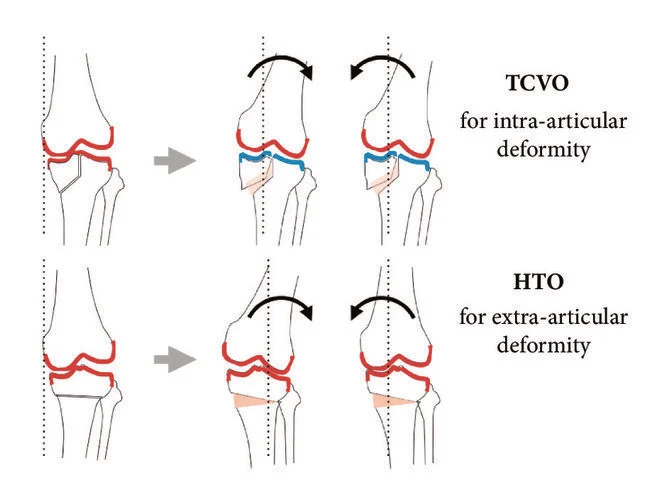
What Is Tibial Condylar Valgus Osteotomy?
Why Do Doctors Recommend TCVO?
Knee deformity can change the way pressure moves through the joint. As a result, one part of the knee may experience excessive stress. Over time, this stress can increase pain and affect movement.
TCVO aims to improve the alignment of the knee and distribute load more effectively. Moreover, the procedure may help preserve the patient’s natural knee joint in carefully selected cases.
Doctors may consider Tibial Condylar Valgus Osteotomy when a patient has:
- Varus knee deformity
- Medial knee joint problems
- Knee pain linked to poor alignment
- Certain types of knee arthritis
- Difficulty walking because of knee deformity
- Suitable knee joint conditions for alignment correction
However, TCVO does not suit every patient. Therefore, an orthopedic specialist must assess the knee before choosing this treatment.
Symptoms That May Need Evaluation
Knee deformity can develop slowly. Therefore, some people may notice changes only after the condition starts affecting daily activities.
Common symptoms may include:
- Knee pain while walking
- Pain during stairs
- Difficulty standing for long periods
- Uneven walking pattern
- Reduced knee movement
- Visible leg alignment changes
- Swelling around the knee
- Difficulty with daily activities
Moreover, symptoms can vary from person to person. Therefore, you should not rely only on symptoms to choose a treatment. A detailed orthopedic assessment can provide a clearer picture.
How Does TCVO Help the Knee?
Tibial Condylar Valgus Osteotomy (Tcvo) In Nagpur
The main goal of TCVO involves improving knee alignment. The surgeon makes a planned correction near the upper part of the tibia. This correction changes the relationship between the tibia and the knee joint.
Moreover, the procedure can help improve load distribution across the knee. As a result, it may reduce excessive stress on the affected part of the joint.
The surgeon plans the correction using clinical examination and imaging tests. Therefore, accurate planning plays an important role in achieving the desired alignment.
Who May Benefit From Tibial Condylar Valgus Osteotomy?
TCVO may benefit selected patients with specific knee alignment problems. However, the procedure requires careful patient selection.
An orthopedic specialist may consider TCVO when the patient has a suitable deformity and enough healthy joint structure to support the treatment. In addition, the patient’s age, activity level, symptoms, and overall health can influence the decision.
Doctors may also consider previous treatments and the condition of the knee cartilage. Therefore, one treatment approach cannot work for everyone.
Your specialist will explain whether TCVO suits your condition after reviewing your examination and imaging results.
Diagnosis Before TCVO
A proper diagnosis helps the surgeon understand the knee problem. Therefore, your orthopedic evaluation may include a physical examination and imaging tests.
The doctor may assess:
- Knee alignment
- Range of motion
- Joint stability
- Pain location
- Walking pattern
- Leg alignment
- Joint space
- Bone condition
X-rays can provide important information about bone alignment and joint changes. Moreover, the doctor may request additional imaging when necessary.
The specialist uses these findings to decide whether TCVO or another treatment would provide better results.
Recovery After TCVO
Tibial Condylar Valgus Osteotomy (Tcvo) In Nagpur
Recovery takes time because the bone needs to heal after the osteotomy. Therefore, patients must follow the rehabilitation plan carefully.
Your doctor may initially limit weight-bearing on the operated leg. Moreover, the rehabilitation team can introduce exercises gradually to improve knee movement and muscle strength.
Recovery may include:
- Pain management
- Wound care
- Follow-up X-rays
- Gradual weight-bearing
- Knee movement exercises
- Muscle strengthening
- Walking training
- Regular orthopedic reviews
As a result, following medical advice can support safe recovery. However, recovery time varies according to the patient’s bone healing, health, activity level, and surgical correction.
Physiotherapy After TCVO
Physiotherapy plays an important role after knee alignment surgery. Therefore, your rehabilitation plan should match your stage of healing.
Early exercises may focus on maintaining safe knee movement and reducing stiffness. Later, therapy can focus on muscle strength, balance, walking, and functional movement.
Moreover, regular exercises can help you regain confidence during daily activities. However, you should avoid exercises that your doctor or physiotherapist has not approved.
A gradual approach helps the knee and surrounding muscles adapt to the correction.
Benefits of TCVO
Tibial Condylar Valgus Osteotomy (Tcvo) In Nagpur
Tibial Condylar Valgus Osteotomy can provide several potential benefits for suitable patients. However, the results depend on the underlying condition and individual healing.
Potential benefits include:
- Improved knee alignment
- Better load distribution
- Relief from certain types of knee pain
- Improved walking function
- Preservation of the natural knee joint
- Support for better knee movement
- Improved daily activity levels
Moreover, the procedure offers a joint-preserving approach in selected cases. Therefore, it can provide an alternative to joint replacement for some patients.
Your orthopedic surgeon can explain the expected benefits based on your knee condition.