
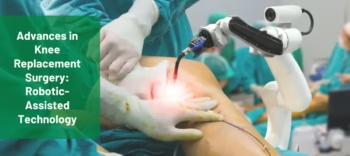
Robotic Knee Replacement in Amravati
Knee joint damage can significantly affect mobility and daily comfort. Many patients consider robotic knee replacement in Amravati when severe arthritis or joint degeneration causes persistent pain and stiffness. Robotic-assisted surgery is an advanced orthopedic procedure that helps surgeons perform knee replacement with greater precision and control. Instead of relying only on manual instruments, surgeons use robotic guidance to plan and execute the procedure more accurately.
This technology allows orthopedic specialists to analyze the patient’s knee anatomy before surgery. Using advanced imaging, surgeons create a detailed surgical plan that helps guide implant placement. Studies show that robotic systems provide highly accurate implant alignment and bone preparation, which supports better joint stability and movement after surgery. With proper surgical planning and expert care, many patients experience improved mobility and reduced knee pain following robotic knee replacement in Amravati.
Understanding Robotic Knee Replacement in Amravati
Robotic knee replacement is a modern surgical technique that assists orthopedic surgeons during knee joint replacement procedures. The robotic system does not perform the operation independently. Instead, it provides real-time guidance and detailed measurements that help the surgeon place implants accurately. This process improves surgical precision and helps achieve better joint alignment.
Before surgery, imaging tests help create a 3D model of the patient’s knee joint. This model allows the surgeon to study the joint structure and plan the exact amount of bone removal. During the operation, the robotic system ensures that the surgical plan is followed carefully. This technology helps the surgeon remove damaged cartilage and bone while preserving healthy tissue, leading to improved joint function after surgery.
Common Conditions Leading to Robotic Knee Replacement
Several medical conditions can damage the knee joint and lead patients to consider robotic surgery. Osteoarthritis is the most common cause of knee replacement. In this condition, cartilage gradually wears away and causes friction between bones. This leads to pain, stiffness, and swelling in the knee joint.
Rheumatoid arthritis can also damage knee joints through chronic inflammation. In some cases, traumatic injuries or fractures may disrupt joint alignment and cause long-term discomfort. When these conditions progress and non-surgical treatments fail to provide relief, orthopedic specialists may recommend robotic knee replacement in Wardha to restore joint movement and reduce pain.
Symptoms That May Indicate the Need for Robotic Knee Replacement
Patients with severe knee joint damage often experience persistent pain during daily activities. Walking, standing, or climbing stairs may become increasingly difficult. Some individuals also notice stiffness in the knee joint after long periods of rest. These symptoms can gradually worsen and limit normal mobility.
Other signs include swelling around the knee, reduced flexibility, and difficulty bending the joint. In advanced cases, patients may experience joint deformity or instability. When these symptoms continue despite medication or physiotherapy, consulting an orthopedic doctor becomes important. After evaluation, the specialist may recommend robotic knee replacement in Amravati as an effective treatment option.
Diagnosis and Evaluation by an Orthopedic Specialist
Proper diagnosis is essential before planning knee replacement surgery. The orthopedic specialist begins with a detailed clinical examination to assess joint movement and stability. The doctor also reviews the patient’s medical history to understand the duration and severity of symptoms.
Imaging tests provide further information about the condition of the knee joint. X-rays help identify cartilage loss, bone damage, and joint misalignment. In certain cases, MRI scans may be recommended to examine surrounding soft tissues. These diagnostic steps help the musculoskeletal specialist determine whether robotic knee replacement surgery is the most appropriate treatment for the patient.
Advantages of Robotic Knee Replacement Technology
Robotic-assisted knee surgery offers several advantages compared to traditional procedures. One major benefit is improved surgical accuracy. Robotic systems help surgeons position implants with extremely precise measurements, which can improve joint function after surgery.
Another advantage involves reduced tissue damage during the operation. Robotic guidance allows surgeons to make controlled bone cuts and protect surrounding structures. This approach may reduce post-operative pain and support faster recovery for many patients. Studies suggest that robotic knee replacement procedures also improve implant alignment, which may enhance long-term joint performance.
Advanced Surgical Techniques Used in Robotic Knee Replacement
Modern orthopedic surgery combines robotic technology with detailed preoperative planning. Surgeons analyze digital models of the knee joint before beginning the procedure. This planning process helps determine the ideal implant size and position for each patient.
During surgery, the robotic system provides continuous feedback to the surgeon. This guidance ensures that bone preparation and implant placement remain within the planned boundaries. As a result, surgeons can achieve highly accurate joint alignment. This precision helps improve knee stability and supports better movement after the procedure.
Why Choose Dr. Abhishek Bhalotia for Robotic Knee Replacement ?
Choosing an experienced orthopedic surgeon plays an important role in successful treatment. Dr. Abhishek Bhalotia focuses on diagnosing knee joint problems carefully and recommending suitable treatment plans based on each patient’s condition. His approach emphasizes accurate evaluation and personalized surgical planning.
At Asian Institute of Advanced Surgeries (AIAS), patients receive comprehensive orthopedic care supported by modern diagnostic and surgical technologies. The facility provides structured treatment programs designed to manage complex joint disorders. With careful surgical planning and rehabilitation guidance, patients can work toward improved joint function and mobility after robotic knee replacement surgery.
Rehabilitation and Recovery After Robotic Knee Replacement
Recovery after knee replacement surgery requires structured rehabilitation and gradual strengthening exercises. Physiotherapy usually begins soon after the procedure to improve joint movement and flexibility. Early exercises focus on gentle movements that protect the new knee joint while promoting healing.
As recovery progresses, therapists introduce strengthening exercises that help improve stability and balance. Patients also learn safe techniques for walking, sitting, and climbing stairs. Following a consistent rehabilitation plan helps support long-term joint function. With proper recovery care, many patients regain comfortable mobility and return to everyday activities.
Frequently Asked Questions – Robotic Knee Replacement in Amravati
1. What is robotic knee replacement surgery in Amravati ?
Robotic knee replacement surgery in Amravati is a knee replacement procedure performed with robotic guidance.
Moreover, the technology helps surgeons place implants with greater accuracy and improved joint alignment.
2. Who may need robotic knee replacement surgery in Amravati ?
Patients in Amravati with severe arthritis or significant knee joint damage may require robotic knee replacement surgery.
Furthermore, doctors usually recommend the procedure when other treatments no longer provide relief.
3. Is robotic knee replacement safe in Amravati ?
Yes, robotic knee replacement surgery in Amravati is considered safe when performed by experienced orthopedic surgeons.
In addition, robotic technology improves surgical precision and implant positioning.
4. How long does recovery take after robotic knee replacement in Amravati ?
Recovery time after robotic knee replacement in Amravati varies depending on the patient’s condition and overall health.
However, physiotherapy and guided rehabilitation help restore strength and improve knee movement.
5. How long do knee replacement implants last for patients in Amravati ?
Most knee replacement implants can last many years with proper care and regular medical follow-ups.
Additionally, maintaining joint health and following rehabilitation programs help ensure long-term results.
Book Appointment with Dr. Abhishek Bhalotia at AIAS
If you are experiencing joint pain, limited mobility, or considering advanced joint replacement options, scheduling a consultation with Dr. Abhishek Bhalotia, MS Ortho, Fellow Joint Replacement (Hyd, UK), Robotic Joint Replacement Surgeon, can help you explore the most precise and effective treatment solutions. Early evaluation ensures that your symptoms are addressed before they affect daily activities and long-term joint health.
Consultations are available at the Asian Institute of Advanced Surgeries (AIAS) in Amravati , where Dr. Bhalotia provides a thorough orthopedic assessment, reviews your medical history, evaluates joint function, and discusses lifestyle and activity factors. This helps in creating a tailored plan for robotic-assisted or conventional joint replacement, depending on your needs.