Asian Institute Of Advanced Surgeries


What Is High Tibial Osteotomy?
Tibial Condylar Valgus Osteotomy (Tcvo) In Nagpur
When Do Doctors Recommend HTO?
Tibial Condylar Valgus Osteotomy (Tcvo) In Nagpur
Doctors may recommend High Tibial Osteotomy in Nagpur when knee alignment increases pressure on one side of the joint. This condition can cause pain during walking, standing, exercise, or other daily activities.
HTO may suit patients who have:
- Arthritis mainly on one side of the knee
- Bow-legged knee alignment
- Knee pain during physical activity
- Early or moderate knee arthritis
- Good knee movement
- Stable knee ligaments
- A desire to remain physically active
- Suitable bone and joint health
However, doctors need to evaluate each patient individually. Therefore, an orthopedic assessment remains important before choosing HTO.
Why Does Knee Alignment Matter?
Tibial Condylar Valgus Osteotomy (Tcvo) In Nagpur
Your knee carries your body weight while you stand and walk. Normally, the joint distributes this load across the knee. However, abnormal alignment can place extra pressure on one part of the joint.
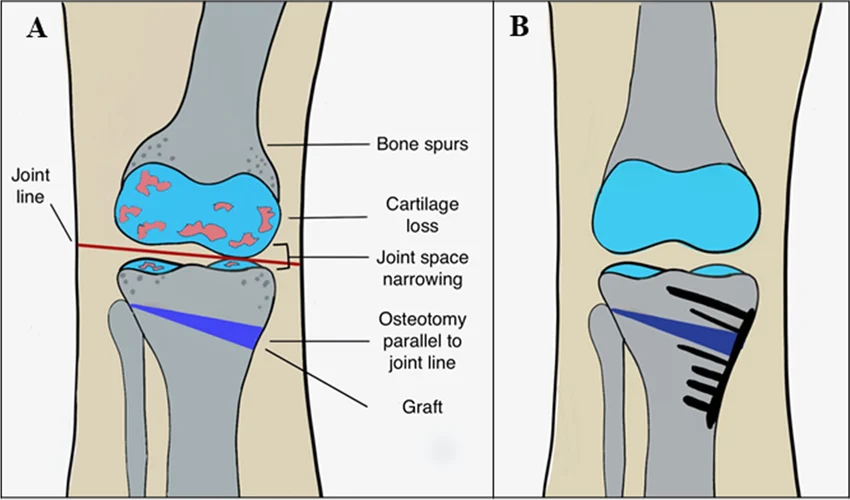
For example, bow-legged alignment can increase stress on the inner side of the knee. Over time, this pressure may contribute to cartilage damage and pain. Therefore, correcting the alignment can help redistribute the load.
Moreover, HTO aims to improve the mechanical position of the knee. As a result, suitable patients may experience better comfort during movement and daily activities.
Symptoms That May Lead to HTO Evaluation
Tibial Condylar Valgus Osteotomy (Tcvo) In Nagpur
Knee pain can have many causes. Therefore, doctors first identify the reason behind your symptoms.
You may need an evaluation if you experience:
- Pain on the inner side of the knee
- Pain while walking or climbing stairs
- Swelling around the knee
- Difficulty with prolonged standing
- Reduced activity levels
- Knee stiffness
- Changes in walking pattern
- Pain during sports or exercise
In addition, repeated pain despite non-surgical treatment may require further evaluation. Your doctor can then determine whether High Tibial Osteotomy (Hto) In Nagpuror another treatment option suits your condition.
How Does High Tibial Osteotomy Work?
During High Tibial Osteotomy (Hto) In Nagpur, the surgeon carefully changes the angle of the upper tibia. The procedure can use either an opening-wedge or closing-wedge technique, depending on the patient’s alignment and surgical plan.
With an opening-wedge technique, the surgeon creates a controlled opening in the bone. Then, the surgeon places a bone graft or suitable material when needed and secures the area with a plate and screws.
With a closing-wedge technique, the surgeon removes a small section of bone and closes the gap to change the alignment.
Therefore, the surgeon selects the technique according to your knee structure, alignment, bone quality, and treatment goals.
Benefits of High Tibial Osteotomy
Tibial Condylar Valgus Osteotomy (Tcvo) In Nagpur
HTO can provide several benefits for carefully selected patients. Moreover, the procedure focuses on preserving the natural knee joint instead of replacing the joint.
Potential benefits include:
- Reduced pressure on the damaged knee compartment
- Better distribution of body weight
- Improved knee alignment
- Relief from knee pain in suitable patients
- Preservation of the natural knee joint
- Support for an active lifestyle
- Possible delay of knee replacement in selected cases
- Improved walking mechanics
However, results vary from person to person. Therefore, your orthopedic surgeon should explain the expected benefits based on your specific knee condition.
HTO vs Knee Replacement
High Tibial Osteotomy (Hto) In Nagpur
Both HTO and knee replacement can treat certain forms of knee arthritis. However, they work in different ways.
HTO changes the alignment of your shinbone. It keeps your natural knee joint in place. Therefore, doctors may consider it for selected younger or active patients with damage mainly in one knee compartment.
Knee replacement removes damaged joint surfaces and replaces them with artificial components. Doctors may recommend this approach when arthritis affects a larger part of the knee or causes severe symptoms.
Moreover, your age alone does not determine the right treatment. Your activity level, joint condition, alignment, arthritis severity, and overall health also matter.
Who May Benefit From HTO?
Tibial Condylar Valgus Osteotomy (Tcvo) In Nagpur
HTO may benefit people who meet specific clinical criteria. In particular, doctors often consider patients with arthritis that mainly affects one compartment of the knee.
You may have a better chance of benefiting from High Tibial Osteotomy (Hto) In Nagpur if you have:
- One-sided knee arthritis
- Suitable knee movement
- Good ligament stability
- Appropriate bone strength
- A correctable alignment problem
- Reasonable body weight
- An active lifestyle
However, High Tibial Osteotomy (Hto) In Nagpur does not suit every patient. Therefore, a detailed examination and imaging assessment help your surgeon make the right decision.