Asian Institute Of Advanced Surgeries


Expert Shoulder Care in Gondia
Common Shoulder Problems We Treat
Shoulder problems can range from mild discomfort to severe pain and movement restrictions. Therefore, you should seek professional evaluation when symptoms continue or affect your daily activities.
Common shoulder conditions include:
- Rotator cuff injuries
- Rotator cuff tears
- Frozen shoulder
- Shoulder dislocation
- Shoulder instability
- Shoulder arthritis
- Labral tears
- Shoulder impingement
- Tendon injuries
- Sports-related shoulder injuries
- Shoulder fractures
- Recurrent shoulder pain
- Stiffness and restricted shoulder movement
Moreover, early evaluation can help identify the underlying cause. Therefore, do not ignore persistent pain, weakness, swelling, or difficulty moving your shoulder.
Why Choose a Shoulder Specialist?
A shoulder specialist focuses on conditions involving the shoulder joint and surrounding structures. Therefore, the specialist can provide focused evaluation when general treatment does not improve your symptoms. Moreover, a specialist can recommend conservative care, physiotherapy, injections, or surgery when appropriate.
In addition, your treatment should match your condition, activity level, age, and overall health. As a result, a personalized approach can support better recovery and functional improvement.
Shoulder Pain Diagnosis
Accurate diagnosis plays an important role in effective shoulder treatment. Therefore, your doctor may begin with a detailed discussion about your symptoms, previous injuries, and daily activities. Moreover, a physical examination can help assess shoulder strength, flexibility, stability, and movement.
Depending on your symptoms, your doctor may recommend imaging tests such as X-rays, ultrasound, or MRI. In addition, these tests can help identify problems involving bones, tendons, cartilage, and other shoulder structures.
Non-Surgical Shoulder Treatment
Many shoulder conditions improve with non-surgical treatment. Therefore, your doctor may first recommend conservative care when your condition does not require surgery. Moreover, treatment can focus on reducing pain, improving movement, and restoring shoulder strength.
Depending on your condition, treatment may include:
- Rest and activity modification
- Physiotherapy
- Shoulder-strengthening exercises
- Pain-relieving medicines
- Anti-inflammatory treatment
- Selected injections
- Guided rehabilitation
However, treatment results can vary from person to person. Therefore, follow your specialist’s advice and attend recommended follow-up appointments.
Shoulder Surgery
Some shoulder conditions may require surgery when symptoms remain severe or conservative treatment does not provide enough improvement. Therefore, your shoulder surgeon will assess your condition carefully before recommending an operation.
Shoulder surgery may help selected patients with significant rotator cuff tears, recurrent dislocation, severe shoulder damage, or certain fractures. Moreover, modern surgical techniques can allow surgeons to address specific problems with greater precision.
However, surgery does not suit every patient. Therefore, your surgeon should explain the expected benefits, possible risks, recovery process, and available alternatives before treatment.
Arthroscopic Shoulder Surgery
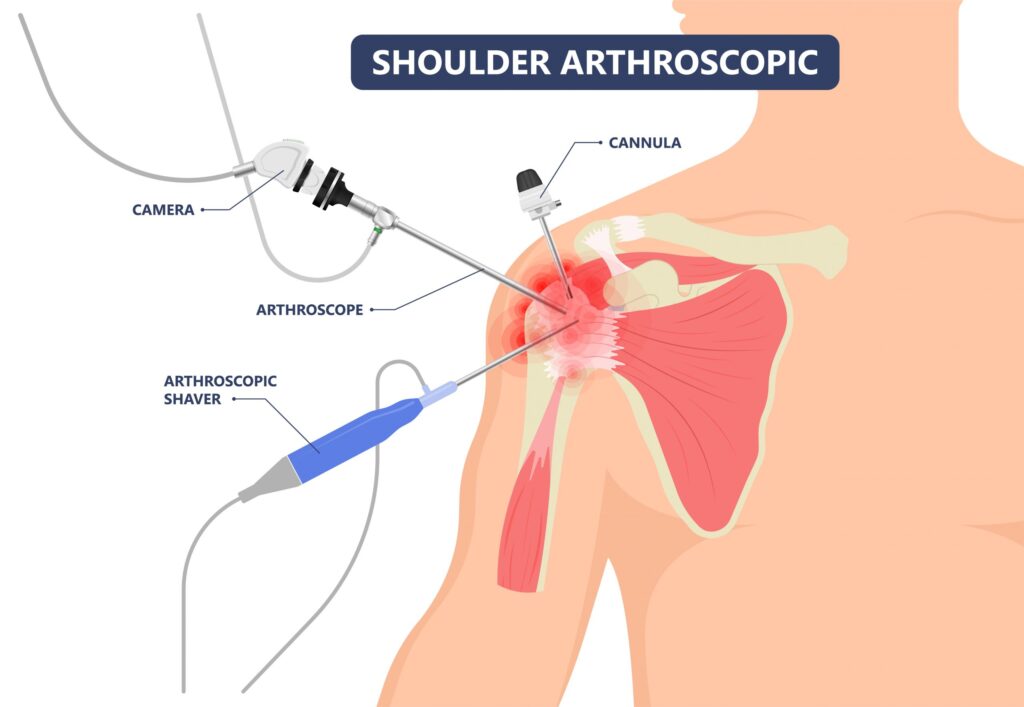
Arthroscopy uses a small camera to help the surgeon view structures inside the shoulder joint. Moreover, surgeons can use specialized instruments through small incisions to treat selected shoulder problems.
Doctors may consider arthroscopic procedures for conditions such as rotator cuff tears, shoulder impingement, labral injuries, and some forms of shoulder instability. Therefore, your surgeon will determine whether arthroscopy suits your condition after a detailed evaluation.
In addition, rehabilitation plays an important role after shoulder surgery. As a result, following your physiotherapy and recovery plan can support a safe return to daily activities.
When Should You Visit a Shoulder Surgeon?
You should consider a shoulder consultation when pain continues despite rest or basic treatment. Moreover, certain symptoms may require prompt professional assessment.
Consider consulting a shoulder specialist if you experience:
- Persistent shoulder pain
- Severe pain after an injury
- Difficulty lifting your arm
- Shoulder weakness
- Repeated shoulder dislocation
- Shoulder stiffness
- Pain that disturbs sleep
- Swelling around the shoulder
- Reduced range of motion
- Difficulty performing daily activities
- Sports-related shoulder injuries
Therefore, early medical assessment can help identify the problem and guide appropriate treatment.
Personalized Shoulder Treatment in Gondia
Recovery and Rehabilitation
Why Patients Look for the Best Shoulder Surgeon in Gondia
Book a Shoulder Consultation in Gondia
Do not let ongoing shoulder pain limit your daily life. Therefore, consult an experienced shoulder specialist in Gondia if pain, stiffness, weakness, or instability continues to affect you. Moreover, timely evaluation can help identify the cause and guide the next step.
If you are searching for the Best Shoulder Surgeon in Gondia, schedule a consultation for a detailed assessment of your shoulder condition. In addition, discuss your symptoms, treatment history, and concerns with the specialist. As a result, you can understand your treatment options and choose an appropriate care plan.