
Unicompartmental Knee Surgery In Nagpur
Unicompartmental knee surgery In Nagpur By Dr. Abhishek Bhalotia, practicing at Asian Institute Of Advanced Surgeries, It is an advanced orthopaedic procedure designed to treat knee arthritis that affects only one section of the knee joint. Instead of replacing the entire knee joint, this procedure focuses on the damaged compartment while preserving healthy bone, cartilage, and ligaments.
At Asian Institute Of Advanced Surgeries in Nagpur, Dr. Abhishek Bhalotia, an experienced orthopaedic and joint replacement surgeon, evaluates patients with knee pain and joint degeneration to determine the most appropriate treatment approach. Furthermore, detailed imaging and clinical examination help identify whether unicompartmental knee surgery is suitable for the patient’s condition.
Because the procedure targets only the affected area, unicompartmental knee surgery aims to restore joint function while maintaining the natural structure of the knee.
Understanding Unicompartmental Knee Surgery
The knee joint is divided into three compartments:
- Medial compartment (inner side of the knee)
- Lateral compartment (outer side of the knee)
- Patellofemoral compartment (front portion of the knee)
However, arthritis or cartilage damage may develop in only one of these compartments. Therefore, replacing the entire knee joint may not always be necessary.
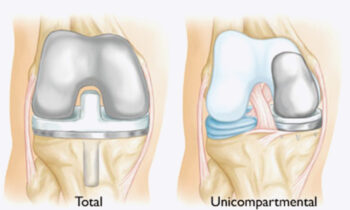
Unicompartmental knee surgery In Nagpur, often referred to as partial knee replacement, replaces only the damaged compartment of the knee joint. Consequently, the healthy portions of the joint remain intact.
This approach helps preserve natural joint movement while addressing the specific area affected by arthritis.
Conditions Treated With Unicompartmental Knee Surgery
Unicompartmental knee surgery In Nagpur may be recommended for patients with localized knee joint degeneration.
Common conditions include:
- Knee osteoarthritis limited to one compartment
- Cartilage damage in a specific part of the knee
- Knee pain concentrated on one side of the joint
- Joint stiffness affecting daily activities
- Reduced knee mobility due to compartmental arthritis
However, not all patients are suitable candidates for this procedure. Therefore, a detailed orthopaedic evaluation is essential.
Procedure Overview
Unicompartmental knee surgery In Nagpur involves several carefully planned steps to ensure accurate treatment of the affected joint compartment.
First, the orthopaedic surgeon evaluates the knee using clinical examination and imaging tests such as X-rays or MRI scans. These assessments help determine the exact location of joint damage.
Next, the surgeon prepares a surgical plan based on the patient’s anatomy and the affected knee compartment.
During the surgery, the damaged cartilage and bone from the affected area are removed. Subsequently, specially designed prosthetic components replace the damaged portion of the joint.
Because the healthy compartments remain untouched, the procedure focuses only on restoring the damaged part of the knee.
Advantages of Unicompartmental Knee Surgery
Unicompartmental knee surgery In Nagpur offers several advantages for patients with localized knee arthritis.
Potential benefits include:
- Preservation of healthy knee structures
- More natural joint movement
- Targeted treatment for specific joint damage
- Smaller surgical exposure compared to total knee replacement
- Personalized surgical planning
Furthermore, preserving healthy bone and ligaments may support improved joint function.
Recovery and Rehabilitation
Recovery following unicompartmental knee surgery varies depending on the patient’s condition and rehabilitation program.
Physiotherapy plays an important role in restoring knee movement and strengthening surrounding muscles. Therefore, patients are usually encouraged to begin guided rehabilitation soon after surgery.
Additionally, gradual return to daily activities helps support recovery and joint mobility.
Regular follow-up appointments with the orthopaedic surgeon allow monitoring of joint function and implant performance.
Advanced Orthopaedic Care In Nagpur
Patients seeking unicompartmental knee surgery in Nagpur can consult Dr. Abhishek Bhalotia at Asian Institute Of Advanced Surgeries. The institute provides modern orthopaedic treatment supported by advanced diagnostic evaluation and surgical planning.
Dr. Bhalotia carefully evaluates each patient before recommending surgical treatment. Moreover, personalized treatment plans help address specific knee joint conditions while supporting long-term joint health.
Through modern orthopaedic techniques and patient-focused care, treatment aims to improve knee mobility and joint function.
When Should You Consult an Orthopaedic Specialist?
You should consider consulting an orthopaedic specialist if knee pain begins to interfere with daily activities.
For example, persistent knee discomfort during walking or climbing stairs may indicate joint degeneration. Additionally, swelling or stiffness around the knee may suggest underlying arthritis.
Furthermore, reduced knee mobility or difficulty bending the knee may require professional evaluation. Therefore, early consultation helps identify the cause of knee problems and determine suitable treatment options.
FAQs For Unicompartmental Knee Surgery
What is unicompartmental knee surgery?
Unicompartmental knee surgery In Nagpur is a procedure that replaces only the damaged compartment of the knee joint while preserving healthy joint structures.
Is unicompartmental knee surgery the same as partial knee replacement?
Yes, unicompartmental knee surgery is commonly referred to as partial knee replacement.
Who may benefit from unicompartmental knee surgery?
Patients with arthritis limited to a single compartment of the knee may benefit from this procedure after proper evaluation.
How long does recovery take after unicompartmental knee surgery?
Recovery time varies depending on the patient’s health, rehabilitation program, and extent of joint damage.
Where can I get unicompartmental knee surgery in Nagpur?
Patients can consult Dr. Abhishek Bhalotia at Asian Institute Of Advanced Surgeries in Nagpur for evaluation and orthopaedic care.
Book Appointment with Dr. Abhishek Bhalotia at AIAS
If you are experiencing joint discomfort, restricted movement, or any musculoskeletal concerns, scheduling a consultation with Dr. Abhishek Bhalotia, MS Ortho, Fellow Joint Replacement (Hyd, UK), Robotic Joint Replacement Surgeon, can help you better understand your condition and explore appropriate care options. Early evaluation often helps patients address symptoms before they begin to interfere with everyday activities and mobility.
Consultations are available at Asian Institute of Advanced Surgeries (AIAS) in Nagpur, where patients receive a structured orthopaedic assessment focused on identifying factors affecting bone, joint, and movement health. During the visit, individuals can discuss their symptoms, medical history, lifestyle habits, and physical activity levels with Dr. Abhishek Bhalotia, ensuring a comprehensive evaluation and guidance toward suitable treatment options for improved joint function and mobility.