
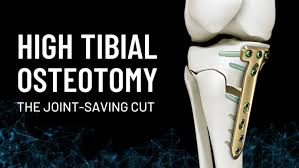
High Tibial Osteotomy (HTO) in Nagpur – Treatment by Dr. Siddharth Jain
High Tibial Osteotomy (HTO) is a surgical procedure aimed at correcting knee alignment issues, particularly in patients with early osteoarthritis affecting one side of the knee. Therefore, seeking specialized care for High Tibial Osteotomy (HTO) in Nagpur ensures accurate assessment, planning, and execution of the surgery. At Asian Institute of Advanced Surgeries, patients undergo a comprehensive evaluation of knee alignment, cartilage condition, and overall joint function. Moreover, Dr. Siddharth Jain carefully considers lifestyle factors, activity level, and symptom severity before recommending HTO as a treatment option. Consequently, this procedure can relieve pain, improve function, and delay the need for total knee replacement in selected patients.
Understanding High Tibial Osteotomy
High Tibial Osteotomy is a procedure in which the upper part of the shinbone (tibia) is cut and realigned to shift weight away from the damaged area of the knee. This correction reduces stress on the arthritic compartment and helps restore proper joint mechanics. At Asian Institute of Advanced Surgeries, Dr. Siddharth Jain performs precise preoperative planning, including imaging and alignment assessment. Accurate correction is critical to optimize outcomes and maintain long-term knee function. Consequently, HTO serves as both a corrective and preventive procedure for patients with unilateral knee arthritis.
Indications for HTO Surgery
HTO is commonly indicated for patients with medial compartment osteoarthritis, knee misalignment (varus deformity), or early cartilage damage. Younger and active patients who wish to maintain mobility and delay total knee replacement often benefit most. At Asian Institute of Advanced Surgeries, Dr. Siddharth Jain evaluates clinical history, imaging studies, and activity goals to determine suitability for HTO. Proper patient selection is essential for achieving pain relief, restoring function, and preventing further degeneration of the knee joint.
Causes of Knee Misalignment Leading to HTO
Knee misalignment that may require HTO often arises from congenital deformities, previous injuries, ligament instability, or uneven cartilage wear. Varus alignment, in which the knee angles inward, increases stress on the medial compartment, accelerating cartilage degeneration. At Asian Institute of Advanced Surgeries, Dr. Siddharth Jain assesses the underlying cause of misalignment along with functional limitations. This comprehensive evaluation ensures that HTO addresses both structural and mechanical factors contributing to knee pain and arthritis progression.
Symptoms Suggesting HTO May Be Needed
Patients who need High Tibial Osteotomy (HTO) often feel pain on the inner side of the knee. They may also have stiffness, swelling, and trouble walking or climbing stairs. The pain usually gets worse when they put weight on the leg. Some patients also notice an uneven walking pattern or weak knee stability.
When non-surgical treatment does not help, patients should consult a specialist for HTO in Nagpur.
At Asian Institute of Advanced Surgeries, Dr. Siddharth Jain checks symptoms and scan reports carefully. He then decides if HTO surgery is the right treatment.
Diagnostic Evaluation by Dr. Siddharth Jain
Accurate preoperative evaluation is important for good HTO results. Dr. Siddharth Jain first checks the knee carefully. He looks at knee alignment, movement, and ligament strength.
At Asian Institute of Advanced Surgeries, doctors use X-rays, CT scans, or MRI scans. These tests help check bone alignment and cartilage health.
This detailed check helps plan the surgery in the right way. As a result, patients get better knee alignment and long-term joint health.
Non-Surgical Alternatives Before High Tibial Osteotomy (HTO) in Nagpur
Before HTO surgery, patients often try non-surgical treatment. These include physiotherapy, knee braces, activity changes, and pain relief medicines. Strong muscles around the knee help reduce pressure and pain.
At Asian Institute of Advanced Surgeries, Dr. Siddharth Jain monitors patients during this care. He checks if symptoms are improving or not.
If pain and weakness continue, surgery may be needed. In such cases, HTO is suggested to improve knee function and movement.
Surgical Procedure Overview of High Tibial Osteotomy (HTO) in Nagpur
During High Tibial Osteotomy (HTO), doctors make a careful cut in the upper shin bone. This helps realign the knee and shift weight away from the damaged area. Plates, screws, or bone wedges are used to hold the bone in place.
At Asian Institute of Advanced Surgeries, Dr. Siddharth Jain performs the surgery with careful focus on alignment and stability. This helps improve results and reduce problems.
After surgery, patients follow a planned recovery program. It includes limited weight-bearing and regular physiotherapy. This helps the bone heal well and improves knee function.
Rehabilitation After High Tibial Osteotomy (HTO) in Nagpur
Rehabilitation after HTO focuses on restoring range of motion, strengthening muscles, and gradually increasing weight-bearing activities. Early exercises help prevent stiffness, while progressive strengthening ensures knee stability. At Asian Institute of Advanced Surgeries, Dr. Siddharth Jain monitors rehabilitation closely and adjusts therapy based on patient progress. Structured physiotherapy improves knee function, supports proper alignment, and enhances long-term outcomes following HTO surgery.
Preventing Future Knee Damage
Maintaining knee health after HTO requires attention to alignment, muscle strength, and safe activity practices. Low-impact exercises, proper biomechanics, and weight management reduce stress on the joint. At Asian Institute of Advanced Surgeries, Dr. Siddharth Jain educates patients on preventive strategies to sustain joint health and delay further degeneration. Consequently, patients can enjoy improved mobility while minimizing the risk of future knee problems.
Why Choose Dr. Siddharth Jain at Asian Institute of Advanced Surgeries
Expert evaluation and precise surgical planning are critical for successful HTO outcomes. At Asian Institute of Advanced Surgeries, Dr. Siddharth Jain emphasizes thorough assessment, symptom evaluation, and patient education. Individuals receive detailed explanations of the procedure, postoperative care, and rehabilitation requirements. Preventive guidance is provided to ensure long-term knee function. Consequently, patients gain confidence in their recovery and actively participate in their joint care.
Long-Term Knee Health After High Tibial Osteotomy (HTO) in Nagpur
Even after successful HTO, ongoing care is essential to preserve knee function. Strengthening exercises, weight management, and proper activity modification support joint stability. At Asian Institute of Advanced Surgeries, Dr. Siddharth Jain provides guidance for long-term knee care, helping patients maintain mobility and reduce the risk of further degeneration. Consequently, individuals experience improved quality of life and sustained joint health after surgery.
Frequently Asked Questions – High Tibial Osteotomy (HTO) in Nagpur
1. What is High Tibial Osteotomy?
HTO is a surgical procedure that realigns the tibia to redistribute weight across the knee and relieve pressure on damaged cartilage.
2. Who is a candidate for HTO?
Candidates are typically younger, active patients with medial compartment osteoarthritis and knee misalignment seeking to delay total knee replacement.
3. How is HTO performed?
The surgeon makes a precise cut in the upper tibia, realigns the bone, and stabilizes it with plates, screws, or wedges for healing.
4. How long is rehabilitation after HTO?
Rehabilitation usually spans several months, focusing on range of motion, muscle strengthening, and gradual return to weight-bearing activities.
5. Can HTO prevent total knee replacement?
HTO can relieve pain, improve function, and delay the need for total knee replacement in appropriately selected patients with early arthritis.
Book Appointment with Dr. Siddharth Jain at AIAS
If you are experiencing joint discomfort, restricted movement, or any musculoskeletal concerns, scheduling a consultation with Dr. Siddharth Jain can help you better understand your condition and explore appropriate care options. Early evaluation often helps patients address symptoms before they begin to interfere with everyday activities and mobility.
Consultations are available at Asian Institute of Advanced Surgeries (AIAS) in Nagpur, where patients receive a structured orthopaedic assessment focused on identifying factors affecting bone, joint, and movement health. During the visit, individuals can discuss their symptoms, medical history, lifestyle habits, and physical activity levels.