Asian Institute Of Advanced Surgeries


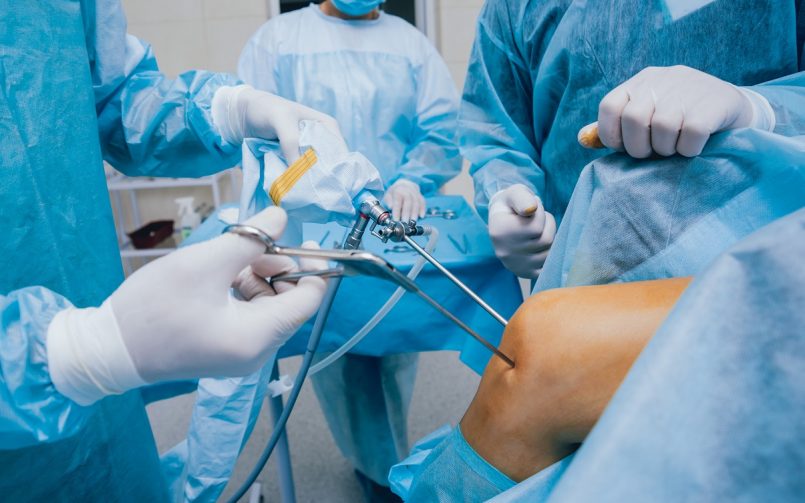
What Is Arthroscopy?
Best Arthroscopy Specialist Doctor In Rewa
When Do You Need an Arthroscopy Specialist?
Best Arthroscopy Specialist Doctor In Rewa
Persistent joint symptoms can interfere with normal activities and may require professional evaluation. Therefore, consider consulting an arthroscopy specialist in Rewa if you experience:
- Persistent knee or shoulder pain
- Repeated joint swelling
- Difficulty bending or straightening a joint
- Joint instability or a feeling that the joint may give way
- Locking or catching of the knee
- Pain after a sports injury
- Suspected ligament or cartilage damage
- Repeated shoulder dislocation
- Reduced joint movement
- Pain that does not improve with appropriate conservative care
Moreover, an orthopedic specialist can assess your symptoms, medical history, physical examination, and imaging reports. As a result, you can receive a treatment plan based on your specific condition.
Conditions Treated Through Arthroscopy
Best Arthroscopy Specialist Doctor In Rewa
An experienced arthroscopy doctor can treat many bone and joint problems. However, the right treatment depends on the joint, the type of problem, and how severe it is.
Knee Arthroscopy
Knee arthroscopy can help treat some problems with the meniscus, cartilage, and ligaments. Moreover, doctors may suggest it for some sports injuries and knee problems that affect movement.
Treatment may help with:
- Meniscus tears
- Some cartilage damage
- Some ligament problems
- Loose pieces inside the joint
- Some causes of knee locking
- Some sports injuries
Therefore, a doctor should check your knee before suggesting arthroscopy.
Shoulder Arthroscopy
Shoulder arthroscopy lets an orthopedic doctor check and treat some problems inside the shoulder. In addition, it can help with problems that affect the rotator cuff, labrum, and shoulder stability.
A doctor may suggest arthroscopy for:
- Rotator cuff problems
- An unstable shoulder
- Labrum injuries
- Repeated shoulder dislocation
- Some causes of shoulder pain
- Some cartilage problems
Moreover, early care can help find the right treatment and prevent long-term movement problems.
Ankle Arthroscopy
Ankle arthroscopy can help doctors check and treat some ankle problems. Therefore, doctors may suggest it for some cartilage damage, loose pieces in the joint, or pain that does not improve with other care.
Elbow and Wrist Arthroscopy
Doctors can also use arthroscopy to treat some elbow and wrist problems. In addition, it can help with some cartilage damage, loose pieces in the joint, and soft tissue problems.
Why Choose an Arthroscopy Specialist in Rewa?
Choosing the right orthopedic specialist can make your treatment journey more structured and comfortable. Moreover, an experienced arthroscopy specialist in Rewa can assess your symptoms and explain suitable treatment options in simple terms.
A specialist focuses on accurate diagnosis, appropriate treatment selection, rehabilitation, and functional recovery. Therefore, you should consider experience, clinical expertise, treatment approach, and patient care when choosing an orthopedic surgeon.
Benefits of Arthroscopic Treatment
Best Arthroscopy Specialist Doctor In Rewa
Arthroscopy offers several potential benefits for appropriately selected patients. However, the results depend on the underlying condition, overall health, rehabilitation, and the specific procedure.
Potential benefits may include:
- Smaller surgical incisions
- Less disruption to surrounding tissues
- Focused treatment of certain joint problems
- Reduced post-operative discomfort in some cases
- Earlier movement in selected procedures
- Potentially faster return to routine activities
Moreover, your orthopedic surgeon will explain the expected benefits and limitations before treatment.
Diagnosis Before Arthroscopy
A proper diagnosis helps the specialist choose the most appropriate treatment. Therefore, your consultation may include a detailed medical history and physical examination.
In addition, your doctor may recommend imaging tests such as X-rays or MRI scans when clinically appropriate. These investigations can help assess bones, cartilage, ligaments, tendons, and other joint structures.
However, imaging alone does not determine treatment. Your doctor combines your symptoms, examination findings, imaging results, activity level, and treatment goals before recommending a procedure.
Arthroscopy vs. Traditional Surgery
Best Arthroscopy Specialist Doctor In Rewa
Recovery After Arthroscopy
Recovery varies according to the joint, procedure, injury, and individual health. Moreover, some patients can begin movement soon after surgery, while others need a longer rehabilitation period.
Your orthopedic team may recommend:
- Prescribed exercises
- Physiotherapy
- Gradual weight-bearing
- Joint mobility exercises
- Strengthening exercises
- Activity modification
- Follow-up appointments
Therefore, follow your rehabilitation plan carefully. In addition, avoid returning to demanding sports or heavy activities before your specialist confirms that your joint can handle them.
Arthroscopy and Physiotherapy
Physiotherapy plays an important role in recovery after many arthroscopic procedures. Moreover, a structured rehabilitation program can help restore mobility, strength, coordination, and joint function.
A physiotherapist can create exercises according to your recovery stage. Therefore, follow the recommended progression instead of increasing activity too quickly. As a result, you can work toward a safer and more functional return to daily activities.
Why Early Orthopedic Evaluation Matters
Ignoring persistent joint pain can affect movement and physical activity over time. Therefore, seek an orthopedic evaluation when pain, swelling, instability, or restricted movement continues.
Moreover, early assessment does not always mean surgery. Many orthopedic conditions improve with appropriate non-surgical care. However, some injuries may require timely treatment to protect joint function.