Asian Institute Of Advanced Surgeries


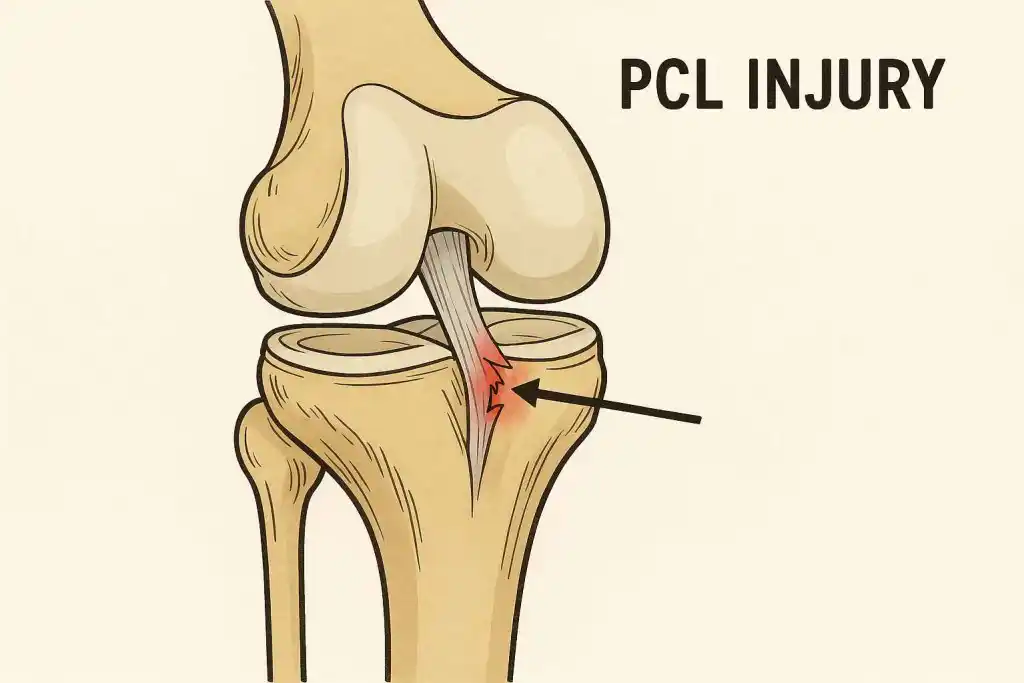
What Is a PCL Injury?
The PCL connects the thigh bone to the shin bone inside the knee. It works with other ligaments to maintain knee stability. Moreover, the PCL helps control knee movement during daily activities and exercise.
A strong force can injure the PCL. For example, a dashboard impact during a car accident can push the shin bone backward. In addition, a sports injury, fall, or direct blow to the front of the knee can damage the ligament.
The injury can range from a mild stretch to a complete tear. Therefore, treatment depends on the injury grade, symptoms, activity level, and overall knee health.
Common Causes of PCL Injuries
Several situations can cause PCL damage. Moreover, high-impact activities can place significant stress on the knee. Common causes include:
- Road traffic accidents
- Sports injuries
- Direct blows to the knee
- Falls on a bent knee
- Sudden twisting movements
- Contact sports
- Heavy impact during exercise
- Knee injuries involving other ligaments
However, every knee injury has different features. Therefore, a PCL injury specialist should assess the knee before you choose any treatment.
Symptoms of a PCL Injury
PCL injuries can cause different symptoms depending on their severity. Moreover, some people may continue daily activities after a mild injury. However, symptoms can become more noticeable during sports or demanding movements.
Common symptoms include:
- Knee pain
- Swelling
- Knee stiffness
- Difficulty walking
- Feeling of knee instability
- Trouble climbing stairs
- Pain while kneeling
- Difficulty running
- Reduced knee movement
- A feeling that the knee may give way
Therefore, consult a PCL Injury Surgeon in Nagpur if these symptoms continue after an injury. Early evaluation can help prevent further knee problems.
How Does a PCL Injury Happen?
PCL Injury Diagnosis in Nagpur
A PCL surgeon begins with a detailed discussion about your injury. Moreover, the doctor checks your knee movement, stability, swelling, and pain. These checks help the specialist understand the possible ligament damage.
The doctor may perform specific knee stability tests. In addition, imaging tests can provide more information about the injury.
MRI Scan
An MRI scan can show the PCL and other soft tissues around the knee. Therefore, doctors often use MRI to assess ligament damage and identify related injuries.
X-Ray
An X-ray can help doctors check the bones around the knee. Moreover, it can help identify fractures or other bone problems that may occur with a major injury.
Physical Examination
A physical examination helps the surgeon compare knee movement and stability. Therefore, the doctor can combine the examination with imaging results before planning treatment.
PCL Injury Treatment in Nagpur
Treatment depends on the severity of the injury. Moreover, your age, activity level, work demands, and other knee injuries can affect the treatment choice.
Non-Surgical Treatment
A mild PCL injury may improve with non-surgical care. Therefore, the doctor may recommend rest, activity changes, ice, pain management, and physiotherapy.
A structured rehabilitation program can improve knee strength and movement. In addition, exercises can strengthen the muscles around the knee and improve stability.
However, you should follow a specialist-guided plan. Avoid returning to sports too quickly because excessive stress can delay recovery.
PCL Surgery
Some patients may need surgery, especially after a complete tear or a severe injury. Moreover, surgery may become suitable when the knee remains unstable or when other ligaments also have damage.
A PCL Injury Surgeon in Nagpur can assess your condition and explain whether surgery can help. The surgeon considers your symptoms, knee stability, activity goals, and imaging results before recommending an approach.
PCL Reconstruction Surgery
PCL reconstruction aims to restore knee stability by replacing the damaged ligament with a graft. Therefore, the surgeon can help restore better control of knee movement.
The surgeon may use tissue from your body or another suitable graft source. Moreover, the surgical technique depends on your injury and individual needs.
After surgery, rehabilitation plays an important role. Physiotherapy helps rebuild strength, improve movement, and support a gradual return to daily activities.
When Do You Need PCL Surgery?
Pcl Injury Surgeon In Nagpur
Not every PCL tear requires surgery. However, some situations may increase the need for surgical treatment.
Doctors may consider surgery when:
- The PCL has a severe tear
- The knee remains unstable
- Other ligaments also have injuries
- Symptoms continue despite rehabilitation
- You need a high level of physical activity
- The injury affects sports performance
- The knee develops ongoing functional problems
Therefore, a specialist should make the final treatment decision after a proper evaluation.
PCL Injury Rehabilitation
Rehabilitation forms an important part of PCL recovery. Moreover, proper physiotherapy can help improve strength, flexibility, balance, and knee control.
Your rehabilitation plan may include:
- Gentle range-of-motion exercises
- Quadriceps strengthening
- Hip and core exercises
- Balance training
- Walking exercises
- Functional training
- Sport-specific exercises
However, rehabilitation should progress gradually. Therefore, your physiotherapist and surgeon can guide each stage according to your recovery.
Recovery After PCL Surgery
Pcl Injury Surgeon In Nagpur
Benefits of Early PCL Injury Treatment
Early medical evaluation can help identify the extent of knee damage. Moreover, it allows the doctor to understand whether the injury involves only the PCL or other structures as well.
Timely treatment can help you manage pain, improve knee function, and reduce instability. In addition, early rehabilitation can support better muscle strength and movement.
However, every injury needs individual care. Therefore, avoid self-treatment when significant pain, swelling, or instability occurs after an accident.
PCL Injury and Sports
Athletes often place high demands on their knees. Therefore, PCL injuries can affect running, jumping, turning, and sudden direction changes.
A proper rehabilitation program can help athletes rebuild strength and confidence. Moreover, sport-specific exercises can prepare the knee for gradual return to activity.
However, returning to sports too soon can increase the risk of another injury. Therefore, follow your surgeon and physiotherapist’s advice before resuming competitive activities.
Can a PCL Injury Heal Without Surgery?
Pcl Injury Surgeon In Nagpur
Some PCL injuries can improve without surgery. Moreover, mild or moderate injuries may respond well to structured rehabilitation and activity modification.
However, severe tears may cause persistent instability. In addition, combined ligament injuries may require surgical treatment.
Therefore, do not decide your treatment based only on symptoms. A proper examination and suitable imaging can help the surgeon understand your condition.